Whale Season in Malibu: Where to Watch From Shore This Winter
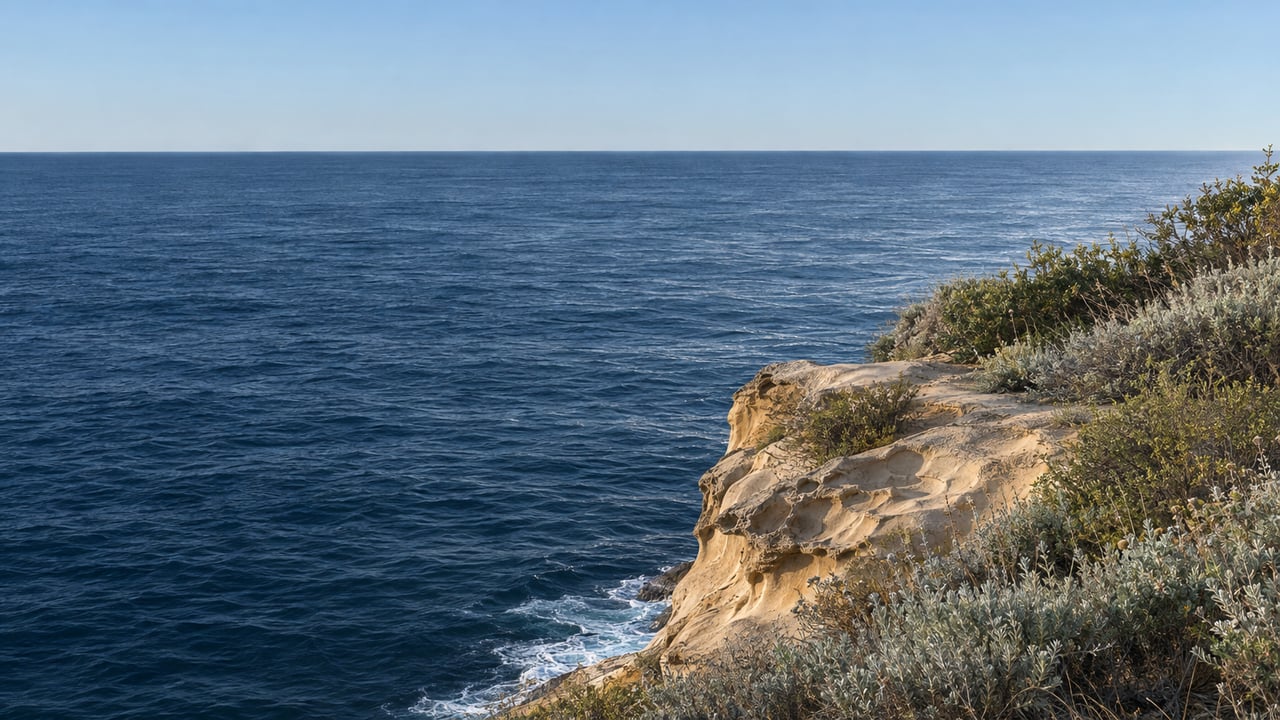
The blow worth waiting for this winter is the small one beside a large one. Last season's gray whale count from the Palos Verdes Peninsula was low overall. It also recorded southbound calves again after a season with none, and that change gives the coming months a reason to keep binoculars by the door.
California State Parks lists gray whale viewing from Point Dume as running from December to mid-April. Most of this guide is about where you can still stand to see them. Several familiar spots along this coastline are partly closed this year, and the place with the widest view is open.
The American Cetacean Society's Los Angeles chapter has run a shore-based gray whale census from the Point Vicente Interpretive Center for 42 seasons. ACS-LA's wrap-up of the season that ended May 25, 2026, recorded 214 southbound gray whales, its second-lowest southbound count. It also recorded 445 northbound whales, a new record low for that direction. The calves tell a different story. Census volunteers logged 17 southbound calves, up from zero the season before, and 16 northbound calves, up from 8. In 2024–25 the same census set record lows in both directions and for calves.
| ACS-LA Point Vicente census | 2024–25 | 2025–26 |
|---|---|---|
| Southbound gray whales | 130 | 214 |
| Southbound calves | 0 | 17 |
| Northbound gray whales | 485 | 445 |
| Northbound calves | 8 | 16 |
The census team's own summary called the higher calf numbers "cautious optimism." ACS-LA also notes that its counts track the whales passing close to shore. Many gray whales take routes farther out, so a low Point Vicente number does not describe the whole population.
The federal picture points in a similar direction. In July 2026, NOAA Fisheries estimated the eastern North Pacific gray whale population at an average of about 17,750 animals, up from about 12,890 the year before. NOAA cautioned that the jump is larger than reproduction alone could explain and may reflect changes in whale behavior or in the survey's assumptions. The same report put the 2025 calf estimate at 85, the lowest on record.
Timing tells you when a calf is most likely. NOAA describes calves being born during the southbound migration or in Mexican waters from early January to mid-February. Northbound whales are generally visible along the West Coast from mid-February through May. In practice, the December watch is mostly adults heading south. The months after February bring any mother-and-calf pairs heading north.
The ACS-LA census returns to the Point Vicente patio on Dec. 1, 2026, and the group has invited the public to visit. Its daily tallies will show what is passing the Peninsula before you drive out to look for yourself.
Point Dume State Beach and Preserve is the official State Parks gray whale viewpoint in Malibu. It has a headland trail that climbs to a viewing platform above the bay. The California Department of Fish and Wildlife also lists the Point Dume beach as a place to see whales during the December to April migration.
Plan the approach before you go. The headland Preserve and the Los Angeles County beach below it are run separately this year, and their access is not the same. According to the County's Point Dume Beach advisory, the beach access road is closed to vehicles at all times, starting at the intersection of Westward Beach Road and Birdview Avenue. Pedestrians and cyclists may not enter active construction areas, where work generally runs from 5 a.m. to 3 p.m. The County lists the cause as severe shoreline erosion and the repairs as ongoing. Restrooms 1, 2 and 3 are closed, with temporary toilets and handwashing stations in their place. State Parks notes that the lower parking lot has been inaccessible while the Westward Beach Road closure is in place.
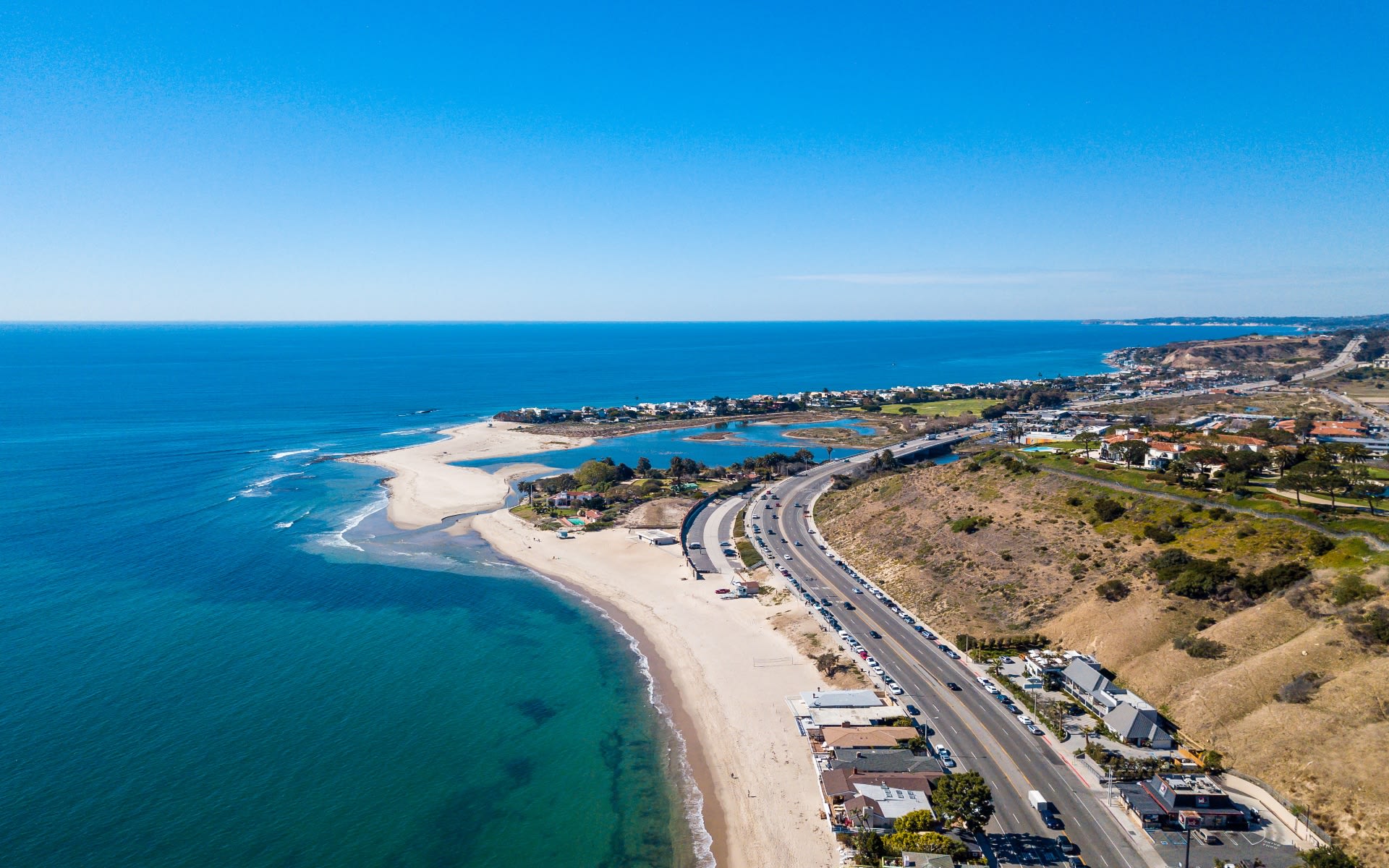
In practice, an afternoon at Point Dume this winter means the bluff, not the sand at the foot of it. On a clear day, the County describes the view from the point as taking in the whole of Santa Monica Bay and, in the distance, Catalina Island. That wide view of open water is what you want for spotting a blow. Check the County page the morning you go, because its repair updates have been changing through the fall.
If Point Dume is busy or you want a different stretch of water, these are the other places along the Malibu coast and how they stand as of this week.
| Spot | What it offers this winter | Status and hours |
|---|---|---|
| Leo Carrillo State Park | 1.5 miles of beach, reefs and tide pools | Day-use parking 8 a.m. to 10 p.m. |
| Robert H. Meyer Memorial State Beach | El Matador, La Piedra and El Pescador, with bluff-top parking and paths down | Day-use parking 8 a.m. to sunset |
| Zuma Beach | Listed by the County as a winter gray whale viewing spot | Check the County's page for PCH underpass access |
| Malibu Lagoon State Beach | Nature trails and beach access | Day-use parking 8 a.m. to sunset |
| Adamson House | Gardens and grounds beside the lagoon | Grounds daily 8 a.m. to sunset; museum Wednesday to Saturday, 11 a.m. to 3 p.m. |
| Malibu Pier | Landside restaurant and fishing areas | End of the pier closed for repairs |
The El Matador group is worth a look for whale watching because the parking sits on the bluff, so you can scan the water before you take the path down to the beach. At the Adamson House, docent tours run Wednesday through Saturday from 11 a.m. to 2 p.m. State Parks notes that closures can follow bad weather.
The pier needs the most planning. State Parks closed the end of Malibu Pier in January 2025 after finding structural concerns. A June 2026 engineering assessment identified deteriorated and missing pilings. The State Parks pier FAQ, last updated Oct. 2, 2026, says an emergency repair contract has been awarded, with construction expected to wrap up by the end of January 2027. After that, the agency will evaluate conditions before setting a reopening timeline. The Malibu Farm Pier Café and the surf and souvenir shop at the end of the pier stay closed during the work. Malibu Farm Restaurant, which sits outside the closure, remains open, and so do the beach rentals before the pier entrance. Fishing is allowed in the designated areas that are open. Lunch at Malibu Farm with a view of the water still works this winter. Walking out to the end to watch for whales does not.
The same winter mornings that suit whale watching also suit tide-pooling. Leo Carrillo is the State Parks option, with reefs and tide pools along its 1.5 miles of shore. Point Dume has its own pools. CDFW describes low tide there as the time the intertidal animals are exposed, and asks visitors to step lightly on the rocks and leave animals where they are.
The water off Point Dume is also a protected area, and the rules are stricter than many visitors expect. Under CDFW's Point Dume marine protected area rules:
That means shells, stones, sea stars and everything else in the pools stays put. This is a general summary, not legal advice. The CDFW page carries the full regulations, and it is the one to check if you have questions about a specific activity.
Pick the day from a local tide table rather than the calendar, and time your visit around the lowest tide of the day.
From shore, you watch for blows and backs. From a boat, you can see far more of the whale. The closest scheduled winter departures on the calendar are up the coast. Island Packers' winter whale-watching calendar opens with trips from Ventura on Dec. 26, 2026, at 10 a.m. and 2 p.m. Departures from Oxnard follow on Dec. 27 at 9:30 a.m. and 1:30 p.m. The company runs its gray whale trips from December to mid-April. The cruises last 3 to 3.5 hours, and posted fares are $54 for adults, $49 for seniors, $41 for children ages 3 to 12, and free for infants. Booked over the holiday week, a trip gives out-of-town guests a reason to head up the coast between family dinners.
Channel Islands Whale Watching, at 4151 S. Victoria Ave. in Oxnard, runs morning and afternoon tours. The company describes its narrated excursions as lasting 3 to 4 hours and names January through March as the peak of the gray whale migration. Visit Oxnard places the most common gray whale sightings from mid-to-late December through mid-March.
If the season becomes more than a weekend outing for you, ACS-LA offers free naturalist training on Tuesdays from October through March. Trained volunteers then ride along on local whale-watching trips, mostly from Dec. 26 through April. The census at Point Vicente also depends on trained volunteers who track whales and other marine mammals from Dec. 1 through late May, and its page invites anyone interested to contact the census director.
If you're hosting family for the holidays and want them on the right bluff at the right hour, or if you're weighing which stretch of Malibu suits the way you spend your winter mornings, I'm glad to help you plan. Desiree Lapin is here when you're ready. Let's Connect.
Stay up to date on the latest real estate trends.

Quick Answer: Yes.


Las Vegas Business Honorees

What CalSTRS/CalPERS Retirees Should Know
While considered a veteran in the industry, Desirée embraces the newest technologies and keeps pace with the latest real estate trends. When you choose to work with her, you benefit from the experience of a full-time, life-time professional who listens.
Desirée Lapin | CA DRE# 1763593
[email protected]
(310) 927-5427
11911 San Vicente Blvd.
Los Angeles, CA 90049